Pest Control Service Riverside protects single-family homes and historic properties from wood-destroying insects, nocturnal rodents, and invasive colony pests across western Riverside County. Property owners facing structural contamination or indoor insect trails receive precise biological identification and immediate domestic remediation without forced monthly retainers.

Pest Control Service in Riverside is a professional domestic defense system that inspects structural entry points, implements non-toxic physical exclusion, and applies targeted botanical perimeter barriers to eliminate active infestations.
Every service reflects the same meticulous attention to detail, whether it's a single job or a larger pest control service project across Riverside.
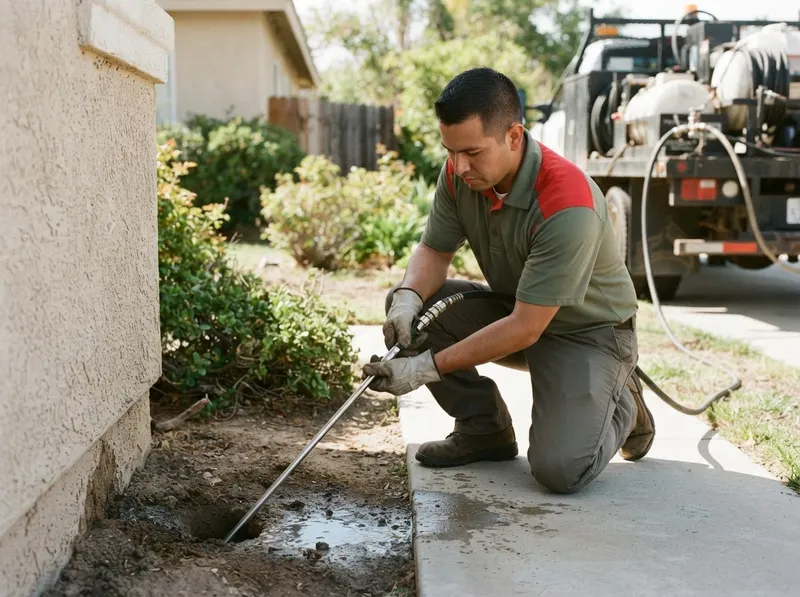
Subterranean termite defense creates a continuous chemical barrier around residential foundations by trenching soil along perimeter concrete footings and injecting non-repellent liquid termiticides at a verified depth of six inches. Technicians drill precision half-inch access ports through attached patio slabs, garage floors, and exterior walkways to intercept subterranean colonies moving upward from moist subsoil layers. This targeted barrier stops worker termites from feeding on structural wall framing without releasing odors or persistent airborne chemicals inside interior living spaces. The applied non-repellent termiticide binds directly to soil silicate particles, creating an undetectable horizontal and vertical protection zone. As foraging subterranean termites track through the treated soil matrix, they transfer micro-doses of the active ingredient across their subterranean colony network through normal social grooming interactions. This horizontal transfer eliminates reproductive queens and secondary reproductives deep within subterranean nest chambers located beneath foundation footings. Soil trenching procedures follow strict structural guidelines, applying four gallons of finished dilution per ten linear feet per foot of depth along foundation grade lines. All interior drilling sites across finished interior tile, aggregate porches, or garage slabs are backfilled with hydraulic expanding cement matched to surrounding concrete color profiles.
Get a quote →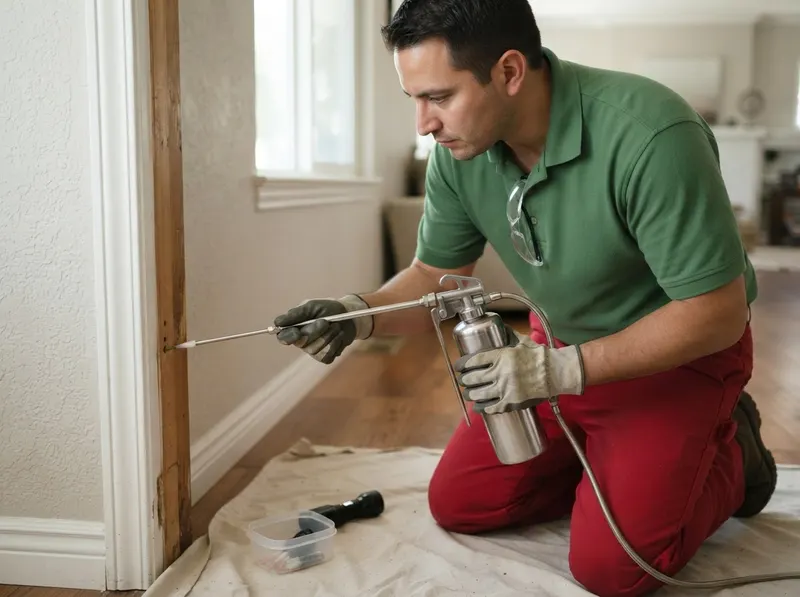
Drywood termite remediation locates hidden structural galleries within attic purlins, ceiling joists, window headers, and decorative exterior eaves using acoustic detection and visual kick-out hole identification. Technicians drill tiny quarter-inch injection ports directly into active galleries, injecting expanding localized termiticide foam that penetrates nested wood cells and halts colony activity upon contact. This targeted localized approach eliminates structural wood-destroying insects while allowing residents and domestic pets to remain safely inside the home without evacuation tents. Precision acoustic probes detect high-frequency vibration frequencies generated by drywood termite worker mandibles chewing structural wood fibers within structural studs. Expanding localized foams expand at a thirty-to-one ratio inside subterranean gallery channels, completely filling hidden chambers and voids carved out by drywood colonies. The foam carries non-volatile active compounds that coat structural timber surfaces, ensuring emerging nymph and alate stages contact lethal barriers as they attempt to migrate through framing elements. After complete injection saturation, access ports are sealed with high-density wooden dowels and structural timber putty, restoring exterior paintability and wood grain integrity. This direct-injection protocol provides defensive control for historic homes, exposed timber framing, and localized architectural trim without exposing sensitive living zones to whole-structure fumigation gasses.
Get a quote →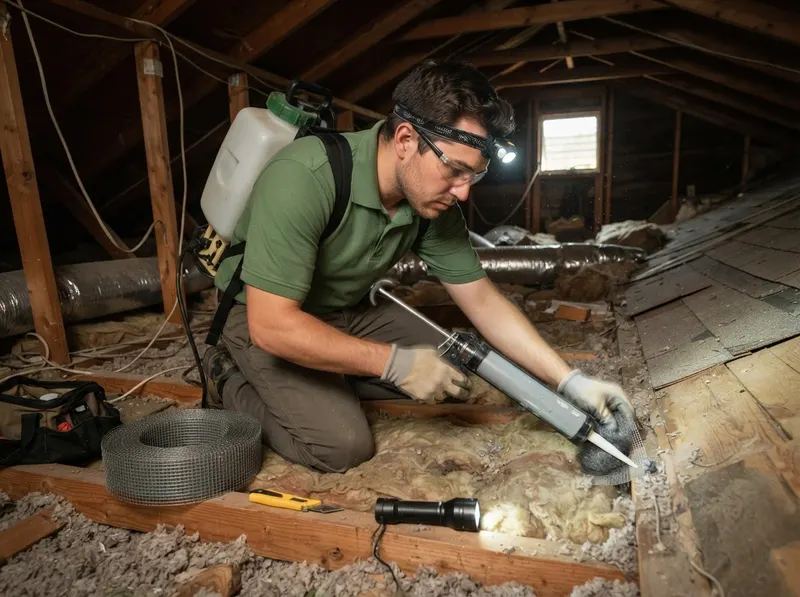
Attic rodent remediation removes nesting roof rats and mice while eliminating biological health hazards from fouled fiberglass insulation. Technicians seal external roof junctions, attic gable vents, plumbing penetrations, and crawlspace grates with quarter-inch galvanized steel mesh and industrial-grade polyurethane backing. After closing entry pathways, technicians place interior mechanical snap traps, extract expired rodents within forty-eight hours, and apply an organic enzyme mist to neutralize dangerous pheromone trails and airborne rodent droppings. The mechanical exclusion phase focuses on every structural gap exceeding a quarter of an inch, using corrosion-resistant hardware cloth attached with heavy-gauge carbon steel staples. Exterior rooflines, including tile roof mud caps, dormer junctions, and soffit air vents, are fitted with custom metal barrier flashing that prevents roof rats from chewing through softer composite wood materials. Inside the attic void, thermal detection cameras locate nesting zones and concentrated urine deposits embedded in fiberglass insulation bats. Contaminated insulation clusters are manually bagged in heavy six-mil plastic envelopes to avoid dislodging airborne bacterial particles into living areas. An atomized botanical bio-enzyme treatment breaks down stubborn ammonia salts, lipid residues, and visual rodent tracking paths, eliminating territorial scent markers that attract wandering exterior rodent populations back toward rooflines.
Get a quote →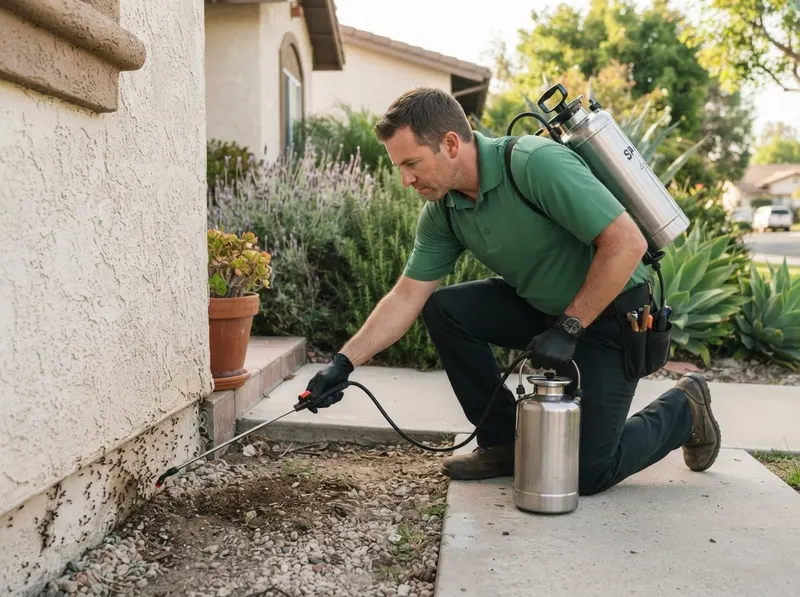
Argentine ant control resolves large super-colonies that invade kitchens, bathrooms, and interior baseboards during dry summer temperature spikes. Treatment incorporates slow-acting, micro-encapsulated non-repellent liquid barriers along three feet of exterior vertical wall foundation and ten feet of surrounding horizontal landscape. Foraging workers carry the undetectable compound directly back to underground satellite nests, eradicating multi-queen reproductive centers without contaminating interior kitchen prep counters or indoor air systems. The micro-encapsulated liquid application utilizes microscopic polymer beads suspended in pure water, protecting the active biological agent from rapid photodecomposition caused by intense ultraviolet exposure and heat waves. As Argentine ant trails navigate over foundation weep screeds and landscape expansion borders, the microscopic capsules adhere electrostatically to their cuticles. Because the active ingredient produces no immediate sensory repellency or avoidance reaction, foraging workers transport the compounds deep into subterranean nests beneath patio stones, foundation footings, and decorative mulch beds. Queens, nursery workers, and developing larvae ingest the transferred material through trophallaxis, systematically terminating colony reproductive capacity within seven to fourteen days. Exterior landscape irrigation lines, valve vaults, and ornamental tree drip emitters are specifically evaluated, as localized subterranean moisture pockets serve as primary survival reservoirs for invasive super-colonies.
Get a quote →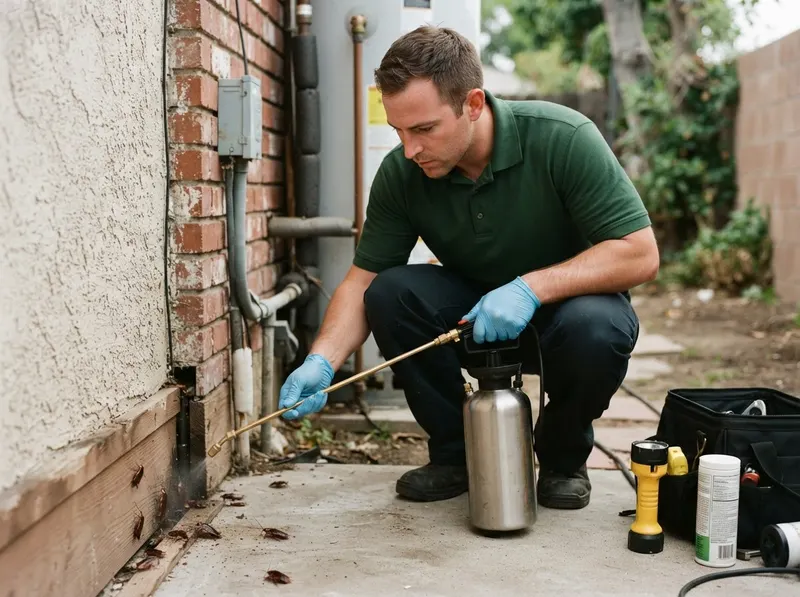
Cockroach eradication targets warm utility conduits, water-meter vaults, perimeter decorative stone walls, and bathroom plumbing chases where Turkestan and American cockroaches nest. Technicians apply targeted insect growth regulators alongside natural botanical sprays into exterior harborage cracks to break the egg reproduction cycle without saturating living spaces with harsh synthetic scents. Mechanical exclusion sweeps are simultaneously installed along external garage doors and sliding glass tracks to block cockroach transit into residential hallways. Turkestan cockroaches frequent exterior landscape voids, decorative rock borders, and subterranean utility boxes, multiplying exponentially during triple-digit summer temperature intervals. American cockroaches migrate upwards through sewer connections, foundation expansion joints, and bathroom drainage cleanouts. Remediation involves deploying micro-fine insect growth regulators that halt juvenile molting cycles, rendering developing nymphs sterile and preventing egg capsule maturation inside hidden crevices. Exterior water boxes, perimeter masonry joints, and crawlspace ventilation shafts receive precise botanical micro-dust formulations that flush hiding adults toward external barrier treatments. Door thresholds, weatherstripping, and garage bottom seals are inspected and reinforced using high-density ethylene propylene diene monomer rubber sweeps, creating an airtight mechanical defense that physically bars crawling vermin from penetrating ground-floor living quarters.
Get a quote →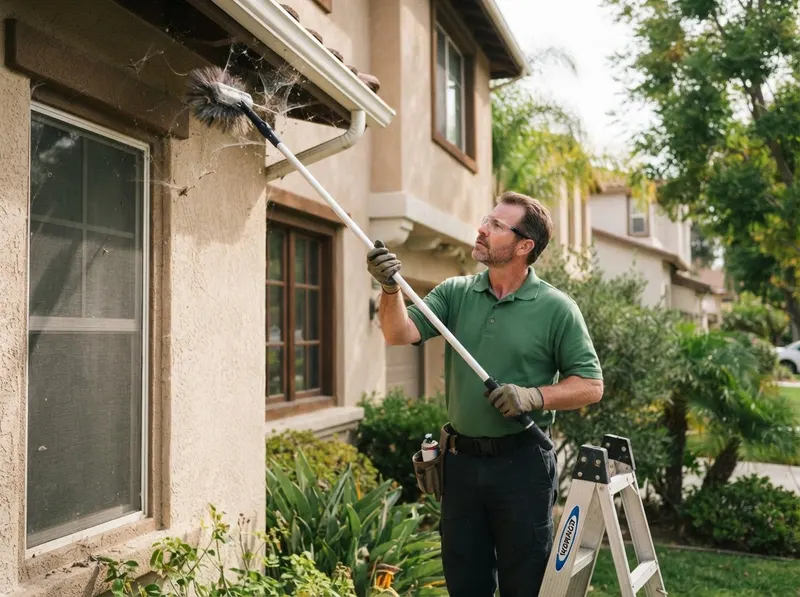
Spider defense focuses on physical removal and targeted micro-barrier application to control black widows, brown widows, and hunting cellar spiders around exterior building perimeters. Technicians mechanically brush away active egg sacs and web networks from window eaves, stucco trim, outdoor lighting fixtures, and patio furniture underhangs using specialized extension poles. A localized botanical repellent is applied into recessed expansion joints, exterior weep screeds, and irrigation control boxes to eliminate insect prey sources. Web clearing removes the dense, irregular silk tangles characteristic of female black and brown widows, targeting structural corners, outdoor water spigots, gas meter assemblies, and patio ceiling corners. The physical extraction of spherical, spiky egg sacs halts population development before hundreds of spiderlings disperse along exterior siding. Technicians then apply a fine botanical insect barrier into dark, undisturbed exterior voids such as weep holes, stucco joints, and outdoor storage sheds. This barrier treatment eliminates secondary ground crawling insects such as beetles, crickets, and moths, completely depleting the web-building food supply. By mechanically removing structural webs and suppressing localized food resources, properties achieve long-term defense against venomous arachnid activity without contaminating patio living areas or children's outdoor play zones.
Get a quote →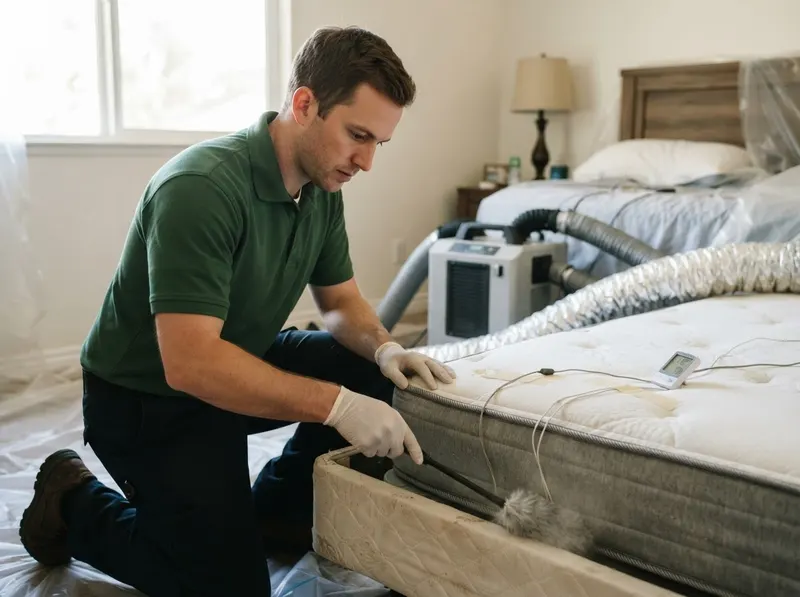
Bed bug elimination restores biological tranquility to distressed bedrooms using targeted localized dry-steam heat alongside non-toxic amorphous silica desiccant dust. High-temperature steam units penetrate mattress seams, bed frames, headboard crevices, and adjacent carpet baseboards to destroy live adults and eggs instantly on contact. Technicians apply electrostatically charged dust into electrical outlet faceplates and hollow structural wall voids, creating a permanent mineral barrier that dehydrates bed bugs without introducing synthetic toxins into sensitive breathing zones. The high-temperature steam system delivers dry superheated vapor at temperatures exceeding one hundred and eighty degrees Fahrenheit directly to fabric seams, box spring internal frames, and tufted upholstery. This dry vapor transfers lethal thermal energy through fabric weave, instantly denaturing insect proteins across all biological developmental stages, including microscopic eggs that resist standard synthetic insecticides. Following thermal application, technicians use precision hand-dusters to disperse non-staining amorphous silica powder into baseboard crevices, wall switches, and electrical conduit voids. Amorphous silica clings to the waxy exterior lipid layers of crawling bed bugs, causing rapid dehydration and mortality through physical absorption rather than chemical toxicity. This dual protocol provides structural defense inside sleeping quarters without leaving persistent airborne odors, synthetic off-gassing, or chemical residues on bedding fabrics.
Get a quote →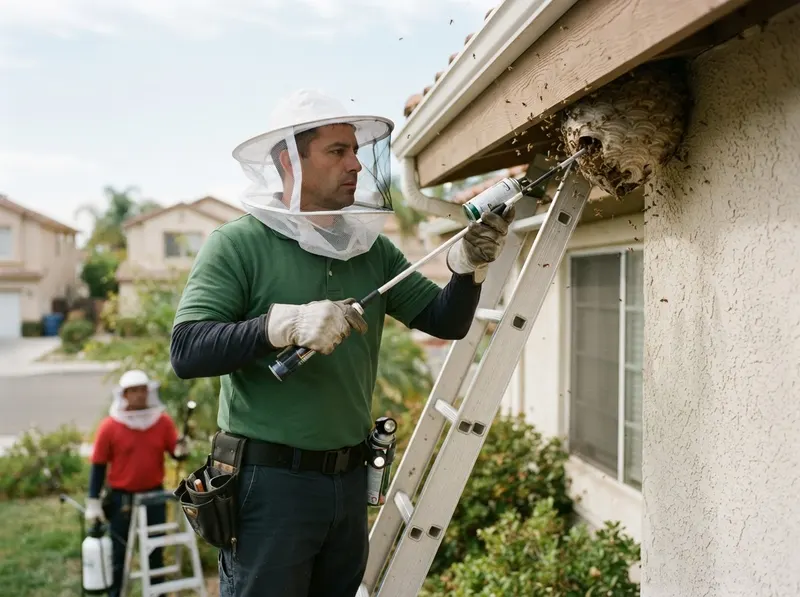
Stinging insect remediation safely detaches and removes aggressive paper wasp, mud dauber, and yellowjacket nests from roof fascia, patio ceilings, stucco soffits, and playground equipment. Protective technicians use direct non-volatile aerosol freezes to immobilize flying wasps instantly before detaching the structural nest structure intact. The mounting surface is thoroughly cleaned and treated with an eco-friendly botanical deterrent to prevent territorial queen wasps from constructing new honeycomb structures in the same architectural recess. Aerial yellowjacket and umbrella paper wasp nests pose severe physical risks along high-traffic backyard doorways, roof gutters, and decorative patio covers during late summer nest-building cycles. Technicians use pressurized cryogenic contact freezing agents that immobilize worker wasps upon contact, preventing territorial defensive swarming behaviors and aggressive venom delivery. Once nests are neutralized, technicians scrape mounting pedicels clean using specialized scraping blades, removing architectural anchor points down to bare stucco or painted fascia wood. Mounting perimeters receive an application of concentrated botanical essential oil repellents, such as thyme and rosemary formulations, which disrupt olfactory pheromone recognition patterns used by scouting queen wasps searching for previous nesting sites. Subterranean yellowjacket ground nests located within landscape beds or abandoned rodent burrows are treated via direct soil injection, followed by complete physical void backfilling to prevent re-colonization.
Get a quote →You get a firm, itemized quote for your pest control service before any work begins, no surprises, no pressure.
Careful prep, tidy work, and a full cleanup when we are done. We treat your home and belongings like our own.
The same trusted, background-checked team from the first call to the final check.
Selecting appropriate domestic pest defense in Riverside depends on whether an infestation involves structural wood destruction, nesting nocturnal vermin, or seasonal ground insects. If drywood termites are active inside exposed attic rafters, decorative exterior corbels, or subflooring, choose localized precision liquid or foam injection. If subterranean termites are emerging from exterior soil channels near concrete footings, choose continuous non-repellent perimeter soil trenching; the trade-off is higher initial material investment for long-term multi-year sub-surface structural barriers versus faster localized spot applications.
If roof rats or house mice have entered attic insulation above ceiling drywall, choose comprehensive mechanical entry sealing alongside non-poisonous snap-trap extraction. If property managers face recurring exterior Argentine ant trails or Turkestan cockroaches entering under door sweeps during 100-degree summer heat waves, choose botanical micro-encapsulated perimeter defense barriers; the trade-off is that structural sealing requires comprehensive carpentry repairs using metal mesh, whereas liquid perimeter barriers require reapplication every sixty to ninety days as intense Inland Empire sunlight breaks down organic compounds. For severe localized bed bug issues inside sleeping quarters, choose direct heat elevation combined with desiccant dust rather than broad chemical spraying to safeguard ambient indoor breathable air.
For properties bordering open riparian arroyos or historic orange groves where field rodents forage continually, exterior tamper-resistant bait stations combined with quarter-inch galvanized mesh along crawlspace foundation vents provide continuous defensive interception, preventing exterior vermin from penetrating inner subfloor cavities during cold winter resets. When selecting between a one-time localized chemical perimeter spray and a structural biological exclusion overhaul, evaluate property age: modern concrete-slab construction in suburban tracts like Orangecrest typically requires exterior barrier band applications and weep-hole vent screen inserts, whereas century-old wood-frame architecture in the Wood Streets requires comprehensive structural timber probing, foundation crawlspace moisture assessments, and custom metal sheet metal flashing installation. The trade-off between thermal bed bug remediation and chemical spot application rests on downtime versus preparation: thermal heat treatments elevate ambient room temperatures above 120 degrees Fahrenheit to eliminate adult insects and eggs in a single six-hour session without synthetic residue, whereas localized desiccant dusting requires manual furniture disassembly and repeated follow-up structural inspections over a multi-week monitoring window.
Every project gets a firm, written price after a free on-site visit. Ranges below for orientation.
Tell us about your pest control service job and we'll send a clear, written quote, usually the same day. Or just call and talk to a real Riverside pro.
(951) 814-1773
Riverside's unique agricultural geography, marked by extensive historic navel orange groves surrounding California Citrus State Historic Park and riparian corridors tracing the Santa Ana River, creates distinct microclimates for pests. In foothill neighborhoods like Hawarden Hills, Woodcrest, and Canyon Crest near the University of California, Riverside (UCR) Botanic Gardens, roof rats migrate directly from heavy citrus canopies, avocado trees, and untrimmed fan palms into tile roof underlayment. In historic districts like the Wood Streets and Downtown Riverside near the Fox Performing Arts Center and Mission Inn Hotel & Spa, historic 1920s Craftsman bungalows, Victorian foundations, and unsealed subfloor crawlspaces face persistent pressure from subterranean termites moving through damp clay soil, as well as drywood termites targeting aging Douglas fir structural framing. Dense agricultural plantings and residential groves around Victoria Heights and Arlington maintain elevated ambient soil humidity along older irrigation canals, creating sustained breeding corridors for Argentine ant mega-colonies that surge toward interior domestic kitchens during extended triple-digit Inland Empire heat waves from July through September. During late autumn cold snaps, rodent populations along the Santa Ana River wildlife belt transition into attic cavities and exterior wall insulation across residential neighborhoods in La Sierra and Casa Blanca. Concrete slab-on-grade suburban architecture throughout Orangecrest and Magnolia Center requires persistent mechanical monitoring along exterior foundation weep screeds and expansion joints where Turkestan cockroaches harborage during hot summer evenings before crawling beneath exterior garage door seals.
Free estimates for Riverside & the surrounding area.
 HomeGuardia Pest Control