Argentine ants do not behave like native species; their colonies merge into massive supercolonies housing millions of workers and thousands of reproductive queens. When homeowners apply standard grocery-shelf contact…
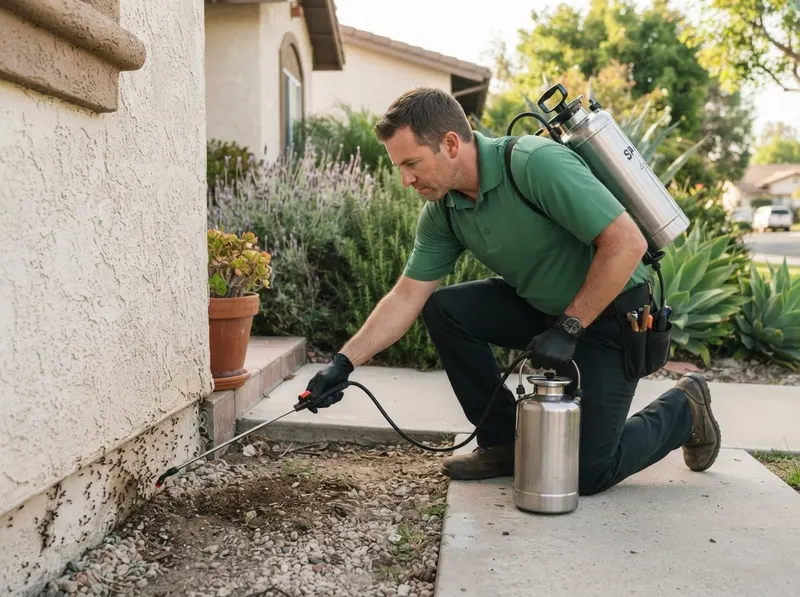
Argentine ants do not behave like native species; their colonies merge into massive supercolonies housing millions of workers and thousands of reproductive queens. When homeowners apply standard grocery-shelf contact sprays inside bathrooms or kitchens, the quick-kill toxin triggers a survival stress response known as budding. The parent colony fractures, driving multiple fertile queens deeper into interior drywall voids and doubling trailing activity across countertops within 72 hours. In contrast, Argentine ant colony perimeter defense relies on an exterior exclusion zone using slow-acting non-repellent liquid micro-emulsions. Worker ants walk across the treated soil perimeter without sensing the active ingredient, carrying the compound on their cuticles directly back to the subterranean nests to distribute it throughout the queen network via grooming and trophallaxis.
Riverside's unique climate directly drives these ant surges into residential living spaces. Hot, arid summers reaching over 100 degrees Fahrenheit in areas like Hawarden Hills, Canyon Crest, and Orangecrest deplete outdoor moisture, forcing ant colonies to trace residential plumbing lines into sinks, dishwashers, and subfloor slab penetrations. In older neighborhoods such as Victoria Heights, Downtown Riverside, and Arlington, mature landscape borders and older stone foundations provide damp thermal shelters that support high-density nesting. Properties bordering the arroyos or citrus groves near California Citrus State Historic Park face persistent colony pressure due to damp irrigation channels and aphid honeydew supplies.
Establishing a defensive perimeter protects indoor air quality and safeguards the household from chemical exposure inside living spaces. Rather than dousing baseboards with foul-smelling sprays, technicians treat a 3-foot band up the exterior stem wall and 2 feet out onto surrounding soil, rock beds, or concrete joints. The trade-off involves seasonal timing: non-repellent perimeter defense requires 7 to 14 days to fully extinguish subterranean queen clusters, meaning trailing numbers dwindle systematically rather than vanishing on the hour of application. For larger acreage properties in Woodcrest or expansive hillside foundations in Eastside and Casa Blanca, outdoor perimeter treatments avoid monthly interior disruption while halting recurring seasonal invasions at the structural edge.
Every job gets a firm, written price after a free on-site visit.
Tell us about your argentine ant colony perimeter defense job in Riverside and we'll send a clear, written quote, usually the same day.
 HomeGuardia Pest Control