Stinging insects native to the Inland Empire establish exterior colonies rapidly between April and October. Western yellowjackets (Vespula pensylvanica) and umbrella paper wasps (Polistes metricus) construct aerial…
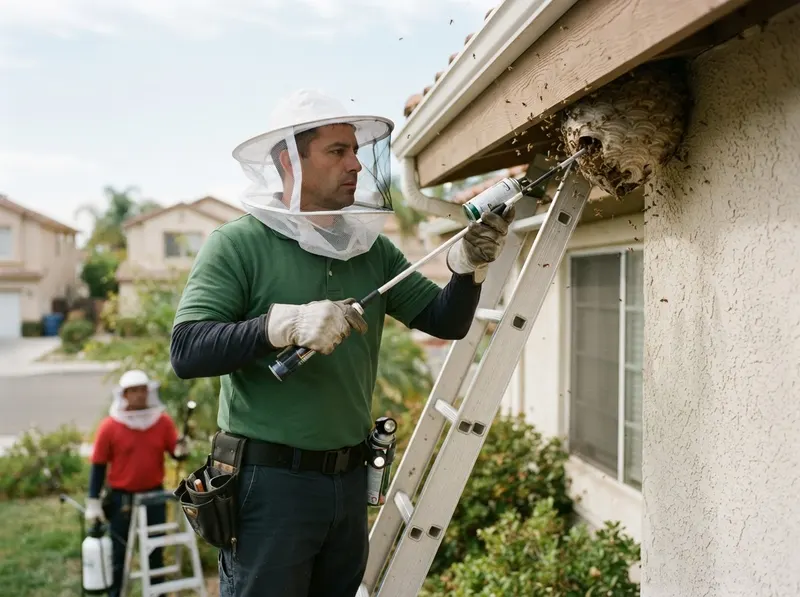
Stinging insects native to the Inland Empire establish exterior colonies rapidly between April and October. Western yellowjackets (Vespula pensylvanica) and umbrella paper wasps (Polistes metricus) construct aerial nests beneath open roof rafters, stucco overhangs, and wooden patio covers throughout Riverside neighborhoods like Orangecrest, Canyon Crest, and Woodcrest. When left undisturbed, paper wasp nests expand from a single foundress hexagon into multi-tier broods supporting 20 to 50 active foragers. Aerial yellowjacket colonies hanging from citrus canopies near California Citrus State Historic Park or along Victoria Heights eaves can surge to several thousand individuals by mid-summer, demonstrating heightened aggression toward vibrating garden machinery and foot traffic.
Eradicating these colonies safely requires distinct applications based on nesting architecture. Exposed paper wasp nests built under open eaves receive directional aerosol freeze treatments that immobilize defensive adults within 15 seconds, followed by physical mechanical detachment and localized microencapsulated residual barriers that deter secondary queens from rebuilding on the same anchor point. Conversely, ground-nesting yellowjackets situated in abandoned rodent burrows around dry landscape beds in Hawarden Hills or Casa Blanca demand pressurized non-repellent liquid injections. These subterranean treatments coat the entire tunnel complex down 12 to 36 inches, eliminating subterranean brood chambers without causing airborne dispersal into nearby open windows.
When wasps enter weep holes, exterior stucco fissures, or hollow patio poles, topical retail sprays fail because they irritate the colony and push workers deeper into attic spaces or interior wall voids. Professional removal incorporates dry insecticidal dust delivered via specialized mechanical bulb dusters into the entry void at 0.5 to 1.0 ounces per access point. This non-volatile dust adheres to foraging insects as they transit the threshold, transferring active ingredient throughout the hidden core over 24 to 48 hours. This targeted structural method protects living spaces, emits minimal low-odor drift, and eliminates the need for ongoing recurring chemical contracts.
Every job gets a firm, written price after a free on-site visit.
Tell us about your exterior wasp and yellowjacket nest removal job in Riverside and we'll send a clear, written quote, usually the same day.
 HomeGuardia Pest Control